

Bosnian Angels and the Move to Impact
Bosnia and Herzegovina is too small a market to grow its companies on its own. At the Business Angel Summit in Sarajevo, the question was who brings the capital that takes them further.

For three days in October, the fifth Business Angel Summit (BAS26) filled a hotel in Ilidža, on the edge of Sarajevo, with angels, founders and fund managers from the region and well beyond it. Sixteen startups from across the Western Balkans pitched for a place in the final. Between the pitches, speaker after speaker returned to the same arithmetic: a small home market caps what a company can earn, and what local investors can put in.
Tanja Kuzman, CEO of the Digital Serbia Initiative, put numbers on it. Angel and seed money in the region grew by about 30% in the first half of 2026, she said, but the number of deals fell by about as much. Every regional angel network combined has invested 3.1 million to date. A company that stays local, she warned, risks being "just a copy with a tax number, not a startup that is investable".
+30%
angel and seed money in the region, first half of 2026
−30%
roughly the drop in the number of deals
3.1m
invested to date by every regional angel network combined
Source: Tanja Kuzman, Digital Serbia Initiative, at BAS26
Angels go first
At the very start, that money comes from people who know the founders. The BH Angel Network, registered last year with six founding members and the backing of Foundation 787, is built for that moment. "We are focused on local companies with global ideas," said Sabina Selvić Oručević, an angel investor and the network's president. What founders lack, she argued, is often not cash but "the support from someone who is being the first" investor.
The network is itself a product of the summit. Vladimir Maric, who mentors Bosnian startups through Foundation 787 and other programmes, told us that "last year we learned a lot about the business angel associations in the region, and since the last summit we've established one ourselves." Earlier editions also showed founders where to find later-stage funding, he added, and Bosnian startups have since applied for it and received it.
Knowing everyone has its limits. "In the Balkans, I think it's our national sport. I know someone. I have a friend," said Dalibor Parać. "That's the good thing, but that's also a bit of dangerous thing." Angels also write small cheques, and the rules do not help: Branko Kecman, director and co-founder of the Banja Luka investment firm Advantis Broker, noted that Bosnia, unlike its neighbours, still has no law that even recognises a startup.
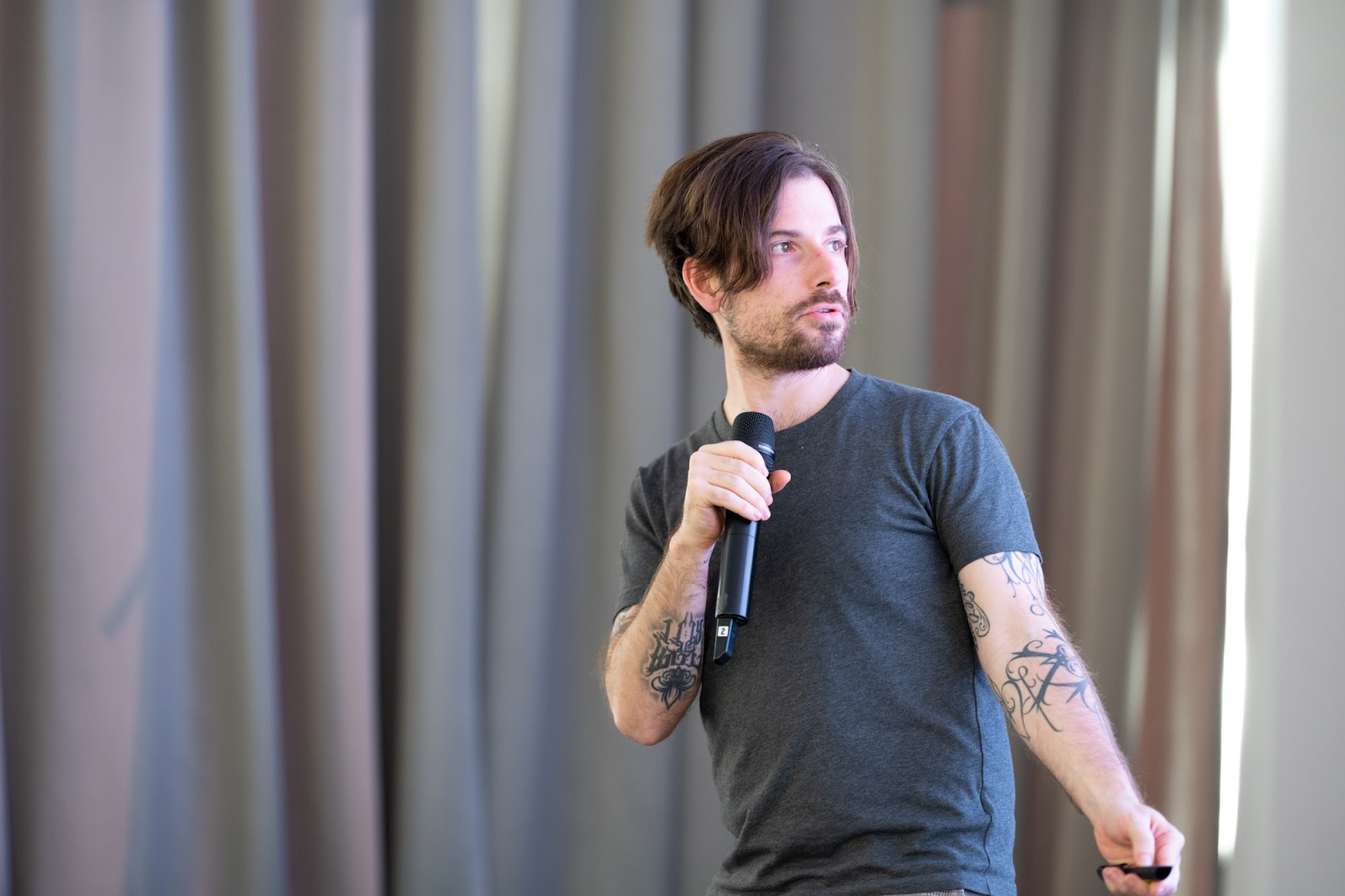
Alessandro Dini, founding partner of Elevate Momentum Partners, spoke after the semifinal pitches on 7 October and showed what a more structured angel scene can look like. His example was SICTIC, the Swiss angel club where he invests and mentors.
SICTIC at a glance
- Swiss angel club, about 600 members
- Works pro bono
- Screens hundreds of pitch decks before any reach investors
- Fixed decision points when closing, so one hesitant angel cannot stall a 100,000 deal for months
"A day like this one is just triggering something, but then you have to follow through," Dini said, and he urged Bosnian angels to pool their cheques rather than invest alone. SICTIC, he added, is "just a 10 years old story":
"You can build something very similar in the region in the same time frame."
Then someone has to follow
Beyond the first cheque, the region needs investors from outside it. That is harder than it sounds. "Germany, same language, just next door. You underestimate how different that is," said Paul Stern of a Swiss angel club, "and then think of Bosnia, which is different language. It's far away."
Even Switzerland cannot do without it. Swiss-based investors provide only a small share of the money going into Swiss startups, Dini said, so "it's very important that an ecosystem […] is able to attract foreign capital into the local startups".
Asked what he would tell such investors, Maric pointed to the founders themselves: university-educated, fluent in English, and often shaped by time abroad through the region's large diaspora. That gives them what he called a "metropolitan spirit", a feel for how foreign markets work. They also finish what they start, he said, "otherwise we feel bad about failure".
The summit's last morning offered a second answer: impact investors, who come for a social return as well as a financial one. Impact Europe's Impact Funds Advisor Martijn Blom, who moderated the Impact Morning panel on 9 October, described impact investing as "not like a different asset class" but "a way of looking at investment".
The investors beside him have already found the region. Justine Palermo said the impact fund manager Inpulse has been "investing in the Balkans for the past 15 years", lending to microfinance institutions that came through the 2008 crisis and COVID with a default rate of zero. Eric Asmar, managing partner of the Moroccan impact firms happy smala and Smala Impact Finance, places small non-dilutive tickets that unlock private money. Each ticket has to be matched at least one to one by private investors, he said, and the fund often goes above that.
Asmar also saw untapped capital closer to home. In both North Africa and the Western Balkans, he said, roughly a tenth of the economy runs on remittances. "Rather than diaspora money coming through Western Union, how can we move some of that money into more value-added activities?"

Investable, not just impactful
Whatever the source of capital, the first test is commercial: can the company sell? On the main stage, Stevica Kuharski, partner at Fil Rouge Capital, put it bluntly:
"If a founder cannot sell from day zero, that founder is not fundable."
Impact investors add a second test on top. Mikael Hietala, impact associate at Feelsgood Capital Partners, Croatia's first social impact fund, looks for impact that is "tangible and intentional", not "some add-on to the business model". But they do not waive the first. Vanja Širbegović of Erste Social Finance Holding named the habit that holds the region back. "We are a region that is very much used to get grants, to get this free money," she said. The shift is "from being grant dependent to actually creating a business". Blom added that the end of easy grants "is not happening at some point. It's actually happening yesterday."
Impact Europe's own research bears this out. Its Mapping the Impact Ecosystem study, published in March 2026, surveyed 70 social enterprises across the Western Balkans, Croatia and Slovenia. For 43 of them, grants make up more than three-quarters of their income, and more than half run on less than €50,000 a year.
70
social enterprises surveyed across the Western Balkans, Croatia and Slovenia
43
get more than three-quarters of their income from grants
1 in 2
runs on less than €50,000 a year
Source: Impact Europe, Mapping the Impact Ecosystem (March 2026)
The grant era is ending in Bosnia for a practical reason. Maric said most financing for entrepreneurs still comes from international organisations and foreign embassies, and it is "rapidly decreasing": some have already left, and others will go in 2027 to regions where help is needed more. Entrepreneurs will then depend on local governments and on new structures such as the angel association, he said, and he wants every level of government to step in with financing.
In the closing session, practitioners from five countries set out what their ecosystems should stop doing. In Albania it was grant dependency; in Bosnia, treating impact businesses as non-profits. The Bosnian table drew a practical conclusion: impact businesses should not wait for specialist impact investors, but be connected with any investor willing to back a good business.

The go-between
That connecting role is what Invest for Change is built for. The four-year programme (2025–2029), funded by the European Union and led by Impact Europe, works with a partner in each Western Balkan country:
Albania
Bosnia and Herzegovina
Kosovo
Montenegro
North Macedonia
Serbia
These partners sit between the three groups the summit kept trying to bring together. They know the entrepreneurs with promising businesses and help make them investable. They work with new forms of capital, from blended finance to impact funds. And they speak to the investors already in the room. Foundation 787 shows how that works: it co-organises the summit, backs the BH Angel Network, and is the programme's partner in Bosnia and Herzegovina.
Dini made the same point from the angels' side. Angel clubs, he said, should not only talk to their peers but partner with others in the ecosystem, including those who can help "with grants or non-dilutive money. So you are not alone."
The gap the programme aims to fill is real. The mapping study found "no communities of impact investors" in the region, and noted that "the few existing angel investors focus primarily on financial returns", mostly in fast-growing sectors such as IT. Its recommendations include building those communities and using grants to match investments, much as happy smala does.
One answer is Impact for Breakfast, which the closing session presented as impact investor circles open to anyone, in each country or across borders. North Macedonia's table plans to open a chapter in Skopje.
As Hatidža Hadžimuhamedović put it when she closed the session on Bosnia's new angel era:
"Ecosystems don't arrive. People build them. Deal by deal, founder by founder, investor by investor."
Invest for Change is funded by the European Union and implemented by Impact Europe in partnership with national partners from the Western Balkans.
Views and opinions expressed are those of the author only and do not necessarily reflect those of the European Union or the European Commission. Neither the European Union nor the European Commission can be held responsible for them.
